
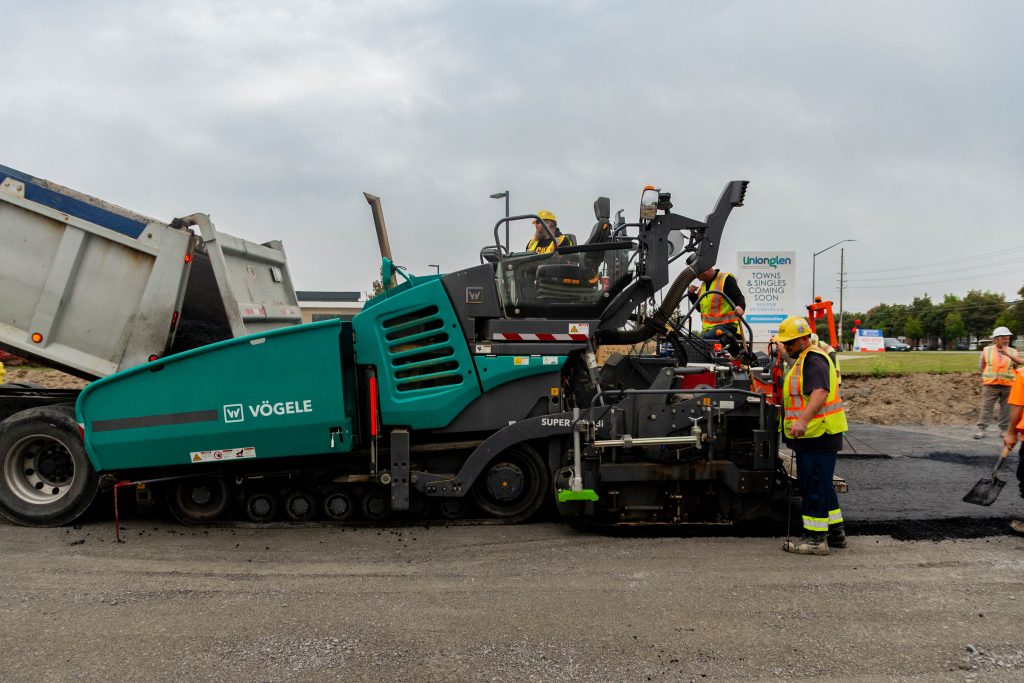
OPSS Standardization: Ontario Takes the Next Step Toward Consistent Municipal Road Construction Standards
The Ontario Government has taken an important step toward standardizing how municipal roads are designed, built, and maintained across the province with the passing of Ontario Regulation 283/26, Standards for Road Design and Construction in August 2026.
These are the enabling regulations following the legislative changes through the Fighting Delays, Building Faster Act, 2025, which gave the Ontario Minister of Transportation authority to establish mandatory standards for municipal road construction.
For procurement processes that begin on or after July 1, 2027, municipalities will be required to use the first phase of mandatory Ontario Provincial Standard Specifications for Municipal Road Construction (OPSS.MUNI) standards in the design and construction of municipal linear infrastructure projects.
The Ontario government’s approach reflects TARBA’s stated priorities:
- Phased approach starting with the highest priorities for harmonization: asphalt and aggregates specifications, which includes Recycled Crushed Aggregates, that have some of the greatest variability and potential for productivity drain and cost inefficiencies;
- Introducing a clearly defined exemption process for municipal projects;
- Reviewing and updating the specs to ensure they are current, technically sound, and practical to implement; and
- Creating an updated governance structure that reflects both industry and municipal input with clear decision-making processes.
This is more than a policy change. It is a generational shift in how Ontario builds roads, creating a more consistent system designed to deliver infrastructure safer, faster, and more cost effectively.
TARBA commends this progress and recognizes the work of industry partners, MTO, municipalities, engineers, and other stakeholders who have helped move this important issue forward.
The OPSS Model: Why Standardization Matters
Ontario’s roads are the backbone of our economy, connecting communities, moving goods and getting people where they need to go.
Yet the way these roads are designed and build has historically varied significantly from municipality to municipality, despite the availability of provincial standards.
The OPSS.PROV and OPSS.MUNI standards were developed to provide a comprehensive and uniform framework for provincial and municipal road construction and procurement practices.
They establish clear, consistent technical requirements for material use, construction methods, quality control processes, and general conditions of contract aligned with best practices and provincial guidelines.
These standards were jointly developed and managed by the Ontario Ministry of Transportation, the Municipal Engineering Association, and representatives from industry. They have been proven by consistently well-built, cost-effective, safe, and dependable highways, roads, sewers, watermains, and many other types of infrastructure in the province. Any changes to the standards are measured and are implemented with realistic timelines.
However, the use of OPSS.MUNI was not mandatory, and Ontario’s 444 municipalities had discretion in adopting these standards, modifying them, or creating their own. Many municipalities had created stricter supplementary specifications, a long list of exceptions, or bypassed OPSS.MUNI, fragmenting consistency and amassing hundreds of different specifications across the province. Municipalities can quickly change their own standards without any consultation, simply issuing a notice to industry that can impact production, design, build, and performance. In the GTA alone, contractors have had to navigate hundreds of different requirements and more than 300 asphalt mix designs.
This fragmentation comes at a cost.
It can increase material and production costs, lower productivity, create unnecessary administrative burden, make it harder for contractors to operate across municipal boundaries, and slow down the delivery of critical infrastructure.
By adopting OPSS.MUNI, municipalities will benefit from uniform standards that simplify tendering, streamline processes and reduce duplication, improve quality, sustainability, and safety, and lower costs. Cutting red tape and uncertainty reduces risk and waste, while boosting productivity and competitiveness; it creates a more level playing field, especially for small and medium-sized businesses.
What Standardization Can Deliver
Better value for taxpayers. Common specifications allow municipalities and contractors to benefit from economies of scale, more competitive procurement, and greater efficiency. CANCEA research has indicated that harmonizing asphalt mix designs in the GTA alone could unlock nearly $1 billion in value over the next decade.
Faster infrastructure delivery. Clear, pre-vetted standards mean less time spent on drafting individual municipal specs, back-and-forth reviews, and disputes — resulting in projects being designed and built with fewer delays.
Better performance and safety. Uniform standards mean consistent pavement thickness, materials, and testing protocols. That means fewer potholes, less emergency repair work, and safer travel for everyone.
A stronger competitive market. Contractors can compete on a more level playing field without having to maintain a different set of processes, equipment, materials and expertise for every municipality.
Greater sustainability. OPSS.MUNI standards already encourage practices like using recycled crushed aggregates — reducing carbon emissions, conserving non-renewable resources, and cutting landfill use.
TARBA’s Priorities Moving Forward
Establishing the policy is the first step. Getting implementation right will determine whether standardization delivers the benefits Ontario expects. The objective should not simply be to replace hundreds of municipal specifications with one document, but rather to build a standardized system that works.
As implementation progresses, TARBA will continue advocating for five key principles:
1. Support continuous procurement
The transition to mandatory OPSS.MUNI standards should support, not slow down, Ontario’s municipal infrastructure pipeline. Municipalities should continue bringing projects to market and tendering work throughout the 2027 transition year. MTO can support this with clear guidance to ensure the new requirements do not create delays, uncertainty, or unnecessary rework. The goal is to maintain momentum on critical infrastructure projects while municipalities and industry adapt to the new standardized framework.
2. Get the standards right
Mandatory standards must be current, technically sound, and practical to implement.
OPSS.MUNI should be regularly reviewed using field experience, technical evidence, pilot projects, and lifecycle cost analysis. This would include establishing a predictable review process to ensure transparency and accountability when updating standards that includes feedback beyond the existing governance committee structure.
3. Minimize municipal customization
To achieve economies of scale and realize the benefits of harmonization, municipalities must adopt OPSS.MUNI in full, subject only to exceptional and project-specific exemptions that are pre-approved by the new governance committee. TARBA recommends two instances for consideration: 1) evidence-based, technically justified cases, and 2) piloting a new material,
equipment, process, or technologies to support innovation. A formal exemption process will help ensure that innovation and quality improvements are shared across the province, rather than remaining siloed in individual municipalities.
TARBA supports a practical and balanced approach that minimizes unnecessary customization, reduces fragmentation, and preserves the flexibility municipalities need to address evidence-based project-specific requirements.
4. Finalize General Conditions of Contract 100 through meaningful consultation
The additional year before OPSS.MUNI 100 becomes mandatory on July 1, 2028 is an opportunity for industry and municipalities to work together to ensure the General Conditions appropriately address issues such as risk allocation, payment, changes, claims, extensions of time, contract administration and other practical realities of delivering infrastructure projects.
This would also include alignment with the latest updates to the Construction Act, Buy Ontario Act, the establishment of standardized testing protocols and a clear dispute resolution process (e.g. use of End Result Specifications).
5. Continue phased harmonization & develop standard contract documents
TARBA will continue to advocate for a clear, phased roadmap to full standardization, with defined timelines and additional specifications identified for harmonization, until OPSS.MUNI is mandatory in its entirety.
This should also include the development of additional standardized contract documents to support the specifications and provide practical tools for tendering, pricing, technical compliance, contract amendments, reporting, and inspection—all necessary to ensure OPSS.MUNI standards are applied consistently and efficiently across municipal projects.
What This Means for Contractors
TARBA members should:
- Familiarize themselves with the OPSS.MUNI standards that will become mandatory, particularly the asphalt and aggregate specifications relevant to their work.
- Review current estimating, production and quality-control practices against the applicable OPSS.MUNI requirements.
- Watch municipal tenders closely as the July 1, 2027 transition date approaches and confirm which standards apply to each procurement.
- Participate in TARBA consultations and provide practical feedback on specifications that create challenges in the field.
- Provide input for the development of OPSS.MUNI 100 and the transition to standardized contract conditions ahead of July 1, 2028.
TARBA will continue to keep members informed as implementation details and requirements evolve.
Building a Better System for Ontario
Ontario has reached an important milestone.
Mandatory OPSS.MUNI standards will bring greater consistency to municipal road construction, reduce unnecessary duplication, and create a more predictable environment for municipalities, contractors, and suppliers.
The year ahead is critical for implementation: getting the standards right, finalizing the General Conditions of Contract, ensuring meaningful industry and municipal input, and creating a system that is practical on the ground.
TARBA’s goal is simple: safer roads, faster project delivery, and better value for Ontario taxpayers, while ensuring the standards work for the workers and businesses actually building our critical transportation infrastructure.